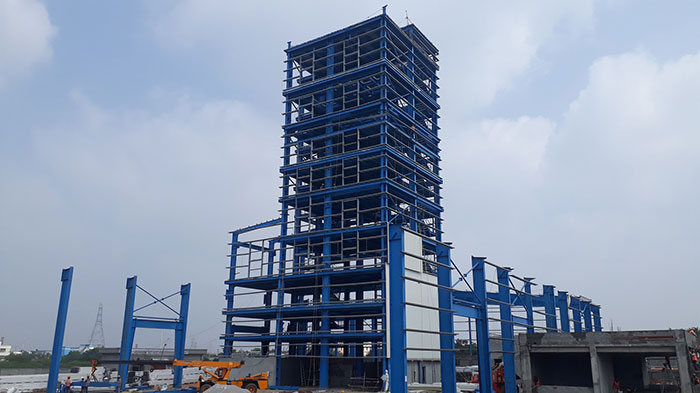
Interarch pre-engineered buildings are custom-designed to meet your exact requirements. The basic parameters that define a pre-engineered building are:
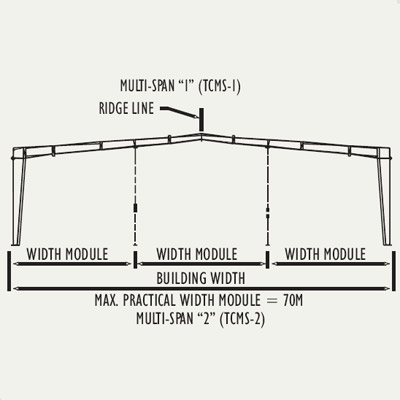
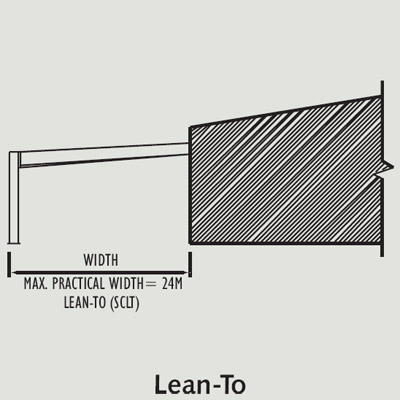
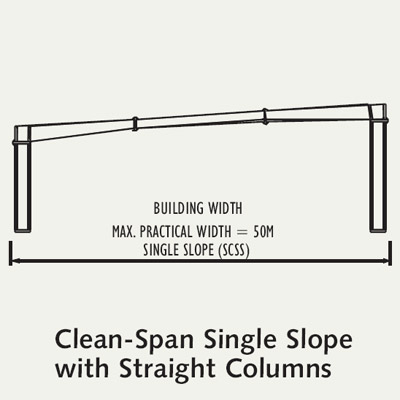
Building Width
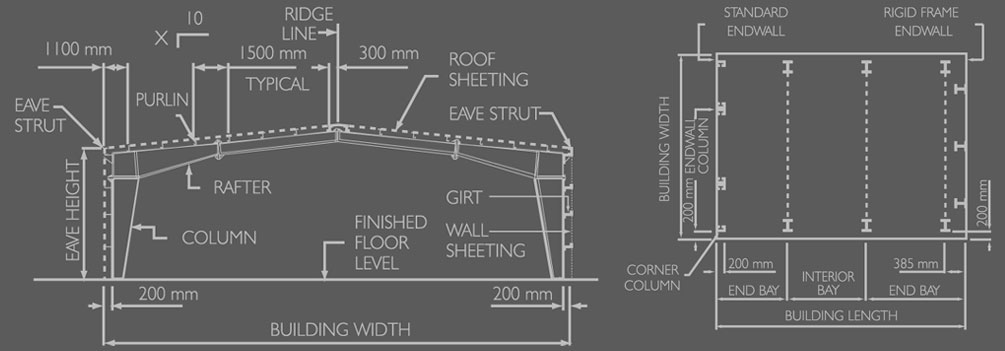
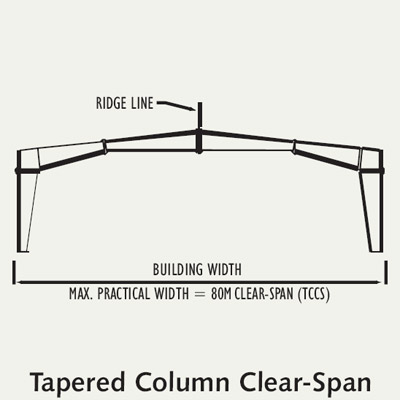
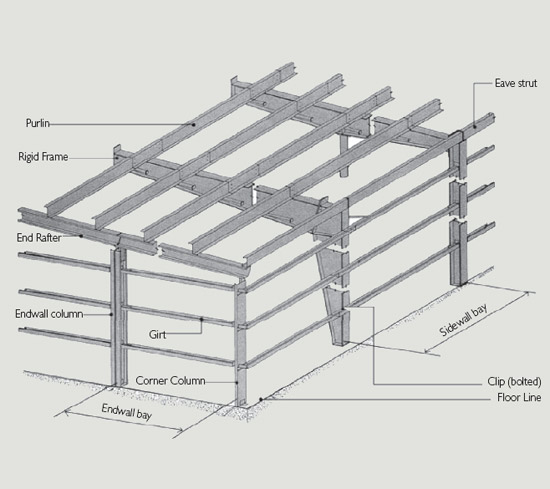
Building width is defined as the distance between the outer side of an eave strut of one side wall to the outer side of an eave strut of the opposite side wall.
Building Length
This is defined as the distance between the outside flanges of endwall columns in the opposite endwalls, and is a combination of several bay lengths.
End Bay Length
End bay length is the distance from the outer side of the outer flange of endwall columns to centre line of the first interior frame column.
Interior Bay Length
This is the distance between the centre line of two adjacent interior mainframe columns. The most common bay spacings are 6 mts, 7.5 mts and 9 mts. The bay lengths can go up to 15 mts.
Building Height
Building height is the eave height, which is usually the distance from the bottom of the mainframe column base plate to the top outer point of the eave strut. Eave height can go up to 30 mts. When columns are recessed or elevated from
finished floor, eave height is the distance from finished floor to the top of the eave strut.
Roof Slope (X/10)
This is the angle of the roof with respect to the horizontal base. The most common roof slope is 1/10. However, any practical roof slope is possible.
Design Loads
Unless otherwise specified, Interarch pre-engineered buildings are designed for the following minimum loads:
- Roof Live Load: 0.75 kN/m2
- Design Wind Speed: As per IS:875 for location.
Design for seismic loads, collateral loads or any other local conditions must be specified at the time of quotation.
Loads are applied in accordance with the latest American Codes and Standards applicable to pre-engineered buildings unless otherwise requested at the time of quotation.